
Gulfstream G800
Long Range Ultra Wide Body Aircraft
Total Number of Passengers: Up to 19 passengers
Total Flight Range: 8,200 nautical miles / 15,186 kilometers at Mach 0.85
Highest Possible Speed: Maximum operating Mach of 0.900
Total Living Spaces: Up to 4 living areas
Sleeps Up To: Up to 10 passengers
Number of Lavatories: Forward and aft lavatories
Manufacturer SPECIFICATIONS

Performance
Max. Range: 8,200 nm
Long-Range Cruise: Mach 0.85
Max. Operating Mach: Mach 0.90
Takeoff Distance: 5,812 ft
Max Altitude: 51,000 ft

Cabin
Number Living Spaces: Up To 4
Total Cabin Length: 46 ft. 10 in.
Cabin Width: 8 ft. 2 in.
Cabin Height: 6 ft. 3 in.
Luggage Cap: 195 cu ft

Max. Weight
Maximum Takeoff: 105,600 lbs.
Maximum Landing: 83,500 lbs.
Maximum Zero Fuel: 60,500 lbs.
Maximum Payload: 6,200 lbs.
Maximum Fuel: 49,400 lbs.

Dimensions
Exterior Length: 99 ft. 9 in.
Exterior Height: 25 ft. 6 in.
Wingspan: 103 ft.
Total Interior Length: 53 ft. 7 in.
Total Cabin Volume: 2,138 cu ft.
The COCKPIT
The Gulfstream Symmetry Flight Deck
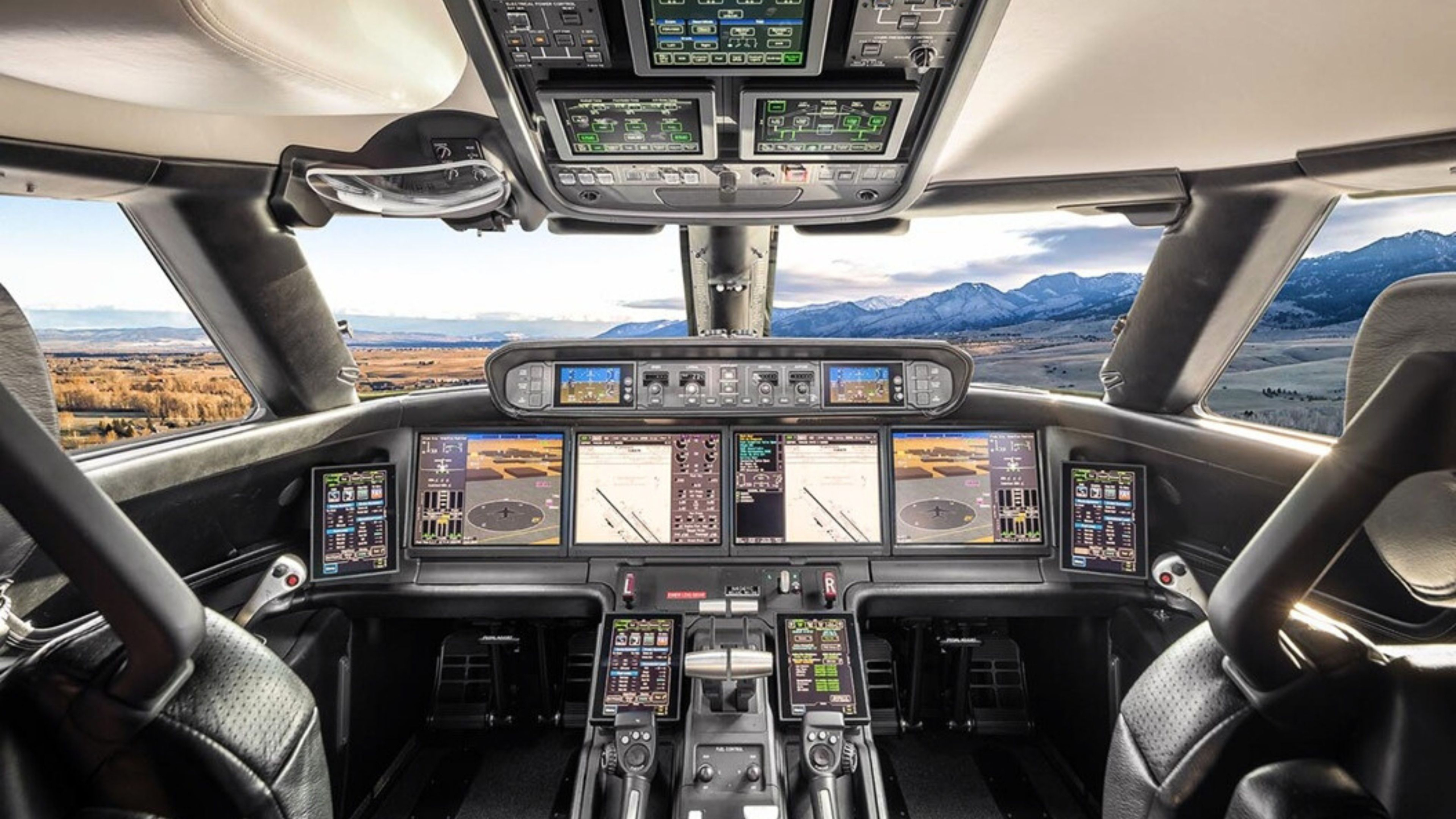
The Gulfstream G800 cockpit is distinctive because it is a purpose-built, long-range command environment engineered to support the operational demands of VVIP, heads-of-state, and ultra-long-range global missions where precision, redundancy, and situational awareness are non-negotiable.
At the core of the flight deck is Gulfstream Symmetry™, a clean-sheet cockpit architecture designed explicitly around pilot workflow. Ten high-resolution touchscreen displays, paired with active control sidesticks, replace legacy switch-heavy panels and reduce cognitive and physical workload. The G800’s active sidesticks are electronically linked, providing tactile feedback, envelope awareness, and synchronized control inputs—critical for crew coordination during high-workload phases such as oceanic operations, steep approaches, and low-visibility arrivals.
The avionics suite integrates Enhanced Vision System II (EVS II) and Synthetic Vision–Primary Flight Display (SV-PFD) as standard operational tools rather than optional enhancements. This fusion of infrared imaging and synthetic terrain allows captains to visually acquire runways, terrain, and obstacles well before natural vision permits, significantly improving stabilized approach criteria and decision-making in marginal conditions. For operations into constrained or security-sensitive airfields, this capability materially enhances safety margins.
Complementing this is a Predictive Landing Performance System, which delivers real-time landing performance calculations to support precise, data-driven decisions at critical phases of flight.
The ENGINE
Rolls-Royce Engines
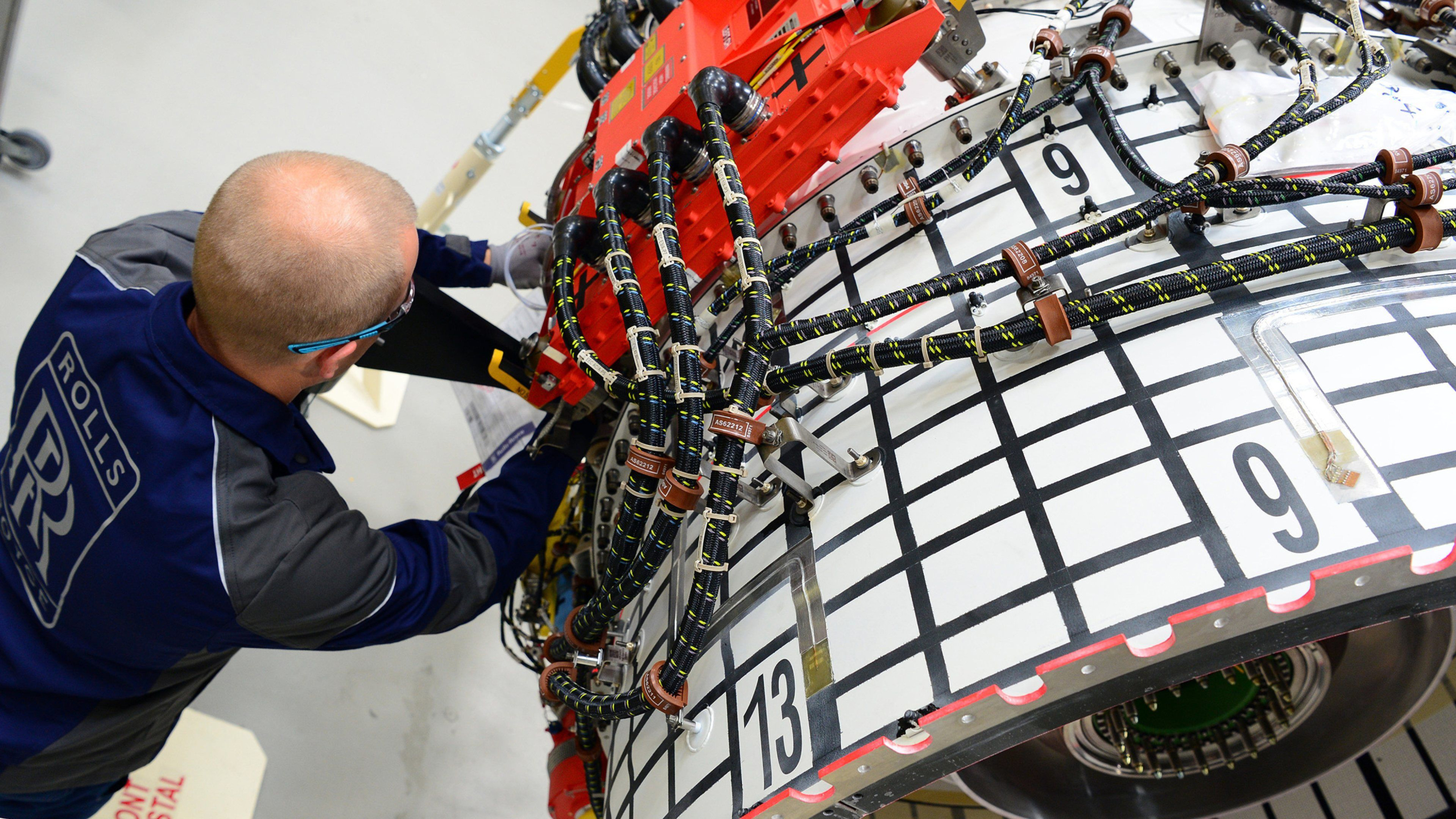
The engines of the Gulfstream G800 are a defining element of the aircraft’s long-range capability and operational credibility. They are not simply powerful—they are purpose-engineered to support ultra-long-range, high-altitude, high-Mach operations with the reliability, efficiency, and margins demanded in VVIP and heads-of-state missions.
The G800 is powered by the Rolls-Royce Pearl 700 turbofan engines, developed specifically for Gulfstream’s next-generation large-cabin aircraft to deliver balanced performance across range, speed, and runway environments.
Each Pearl 700 produces approximately 18,250 pounds of thrust, providing strong takeoff performance at maximum takeoff weight while preserving climb margins at high-density altitudes. For captains, this translates into confident obstacle clearance, improved second-segment performance, and operational flexibility when departing shorter or performance-limited runways—scenarios that are common in government and VVIP operations.
The Pearl 700 incorporates advanced high-pressure core architecture, a high bypass ratio, and state-of-the-art materials that deliver meaningful reductions in fuel burn compared to previous-generation engines. This efficiency is a cornerstone of the G800’s 8,200-nautical-mile range, allowing pilots to plan nonstop intercontinental missions with greater reserve margins and fewer compromises on payload.
For long-range captains, fuel efficiency is not simply about cost—it is about range certainty, diversion flexibility, and risk reduction when operating far from alternates or maintenance support.
Pilot COMPENSATION for 2026

PIC Contract Pilot Compensation
$4,500 - $6,000+

SIC Contract Pilot Compensation
$4,000 - $4,500
Type Rating CERTIFICATION

Initial / Recurrent Training
FlightSafety International – G700/G800 Training Programs (Savannah, Georgia):
Direct training information and enrollment details for Gulfstream G700/G800 pilot training.

Training Schools
At present, FlightSafety International is effectively the sole factory-authorized and widely recognized provider of Gulfstream G800 initial and recurrent type rating training with validated full-flight simulator courses and official curriculum developed in coordination with Gulfstream Aerospace for regulatory approvals.
The Gulfstream G700/G800 Professional Pilot Forum
CONNECT With Pilots Who Fly Your Specific Aircraft.
Learn More Now! >>>