
Bombardier Challenger 300/3500
Long Range Ultra Wide Body Aircraft
Total Number of Passengers: Up to 10 passengers
Total Flight Range: 3,400 nautical miles
Highest Possible Speed: Maximum operating Mach of 0.83
Total Living Spaces: Up to 1 living area
Sleeps Up To: Up to 10 passengers
Number of Lavatories: Aft lavatory
Manufacturer SPECIFICATIONS

Performance
Max. Range: 3,400 nm
Long-Range Cruise: Mach 0.80
Max. Operating Mach: Mach 0.83
Takeoff Distance: 4,835 ft
Max Altitude: 45,000 ft

Cabin
Number Living Spaces: 1
Total Cabin Length: 25 ft. 2 in.
Cabin Width: 7 ft. 2 in.
Cabin Height: 6 ft. 0 in.
Luggage Cap: 106 cu ft

Max. Weight
Maximum Takeoff: 40,600 lbs.
Maximum Landing: 34,150 lbs.
Maximum Zero Fuel: 28,200 lbs.
Maximum Payload: 3,400 lbs.
Maximum Fuel: 14,150 lbs.

Dimensions
Exterior Length: 68 ft. 8 in.
Exterior Height: 20 ft. 0 in.
Wingspan: 69 ft.
Total Interior Length: 25 ft. 2 in.
Total Cabin Volume: 930 cu ft.
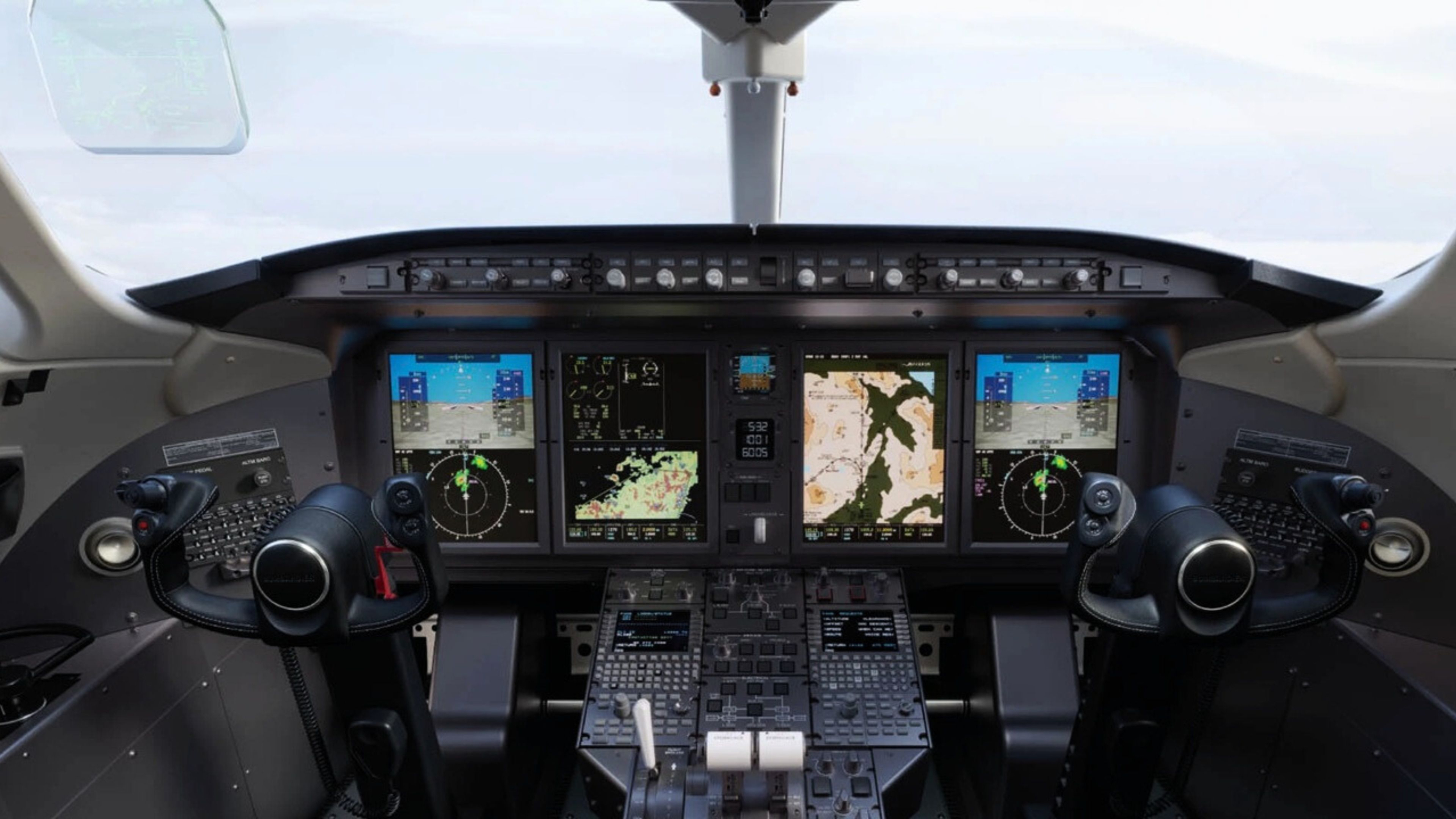
The COCKPIT
The Bombardier Symmetry Flight Deck
The Bombardier Challenger 3500 cockpit represents one of the most refined, pilot-friendly flight decks in business aviation today. Built around the Collins Aerospace Pro Line Fusion™ avionics suite,
The Challenger 3500 delivers a seamless balance of advanced automation, intuitive human-machine interface (HMI), and operational reliability.
What makes the Challenger 3500 distinctive is not just the technology itself, but how thoughtfully it is integrated to support real-world line operations, reduce workload, and enhance situational awareness throughout every phase of flight.
At the heart of the Challenger 3500 cockpit is the Pro Line Fusion flight deck with touch-enabled control surfaces that complement and do not replace physical switches.
The Bombardier has retained a hybrid control philosophy for a cockpit that feels immediately familiar, even for pilots transitioning from other Collins-equipped aircraft.
The Challenger 3500 cockpit excels at information clarity and prioritization that is critical for safe and smooth operations thanks to the:
- Synthetic Vision System (SVS) with airport, terrain, and obstacle depiction
- Enhanced Vision System (EVS) compatibility for improved low-visibility operations
- Advanced Map-Based Vertical Navigation (VNV) for stabilized descents
- Integrated FANS 1/A+, CPDLC, and ADS-B capabilities for global operations
This is a system that presents only what the pilot needs, when they need it while helping crews to stay ahead of the aircraft rather than reacting to it.
flight.
The ENGINE
Rolls-Royce Engines
The
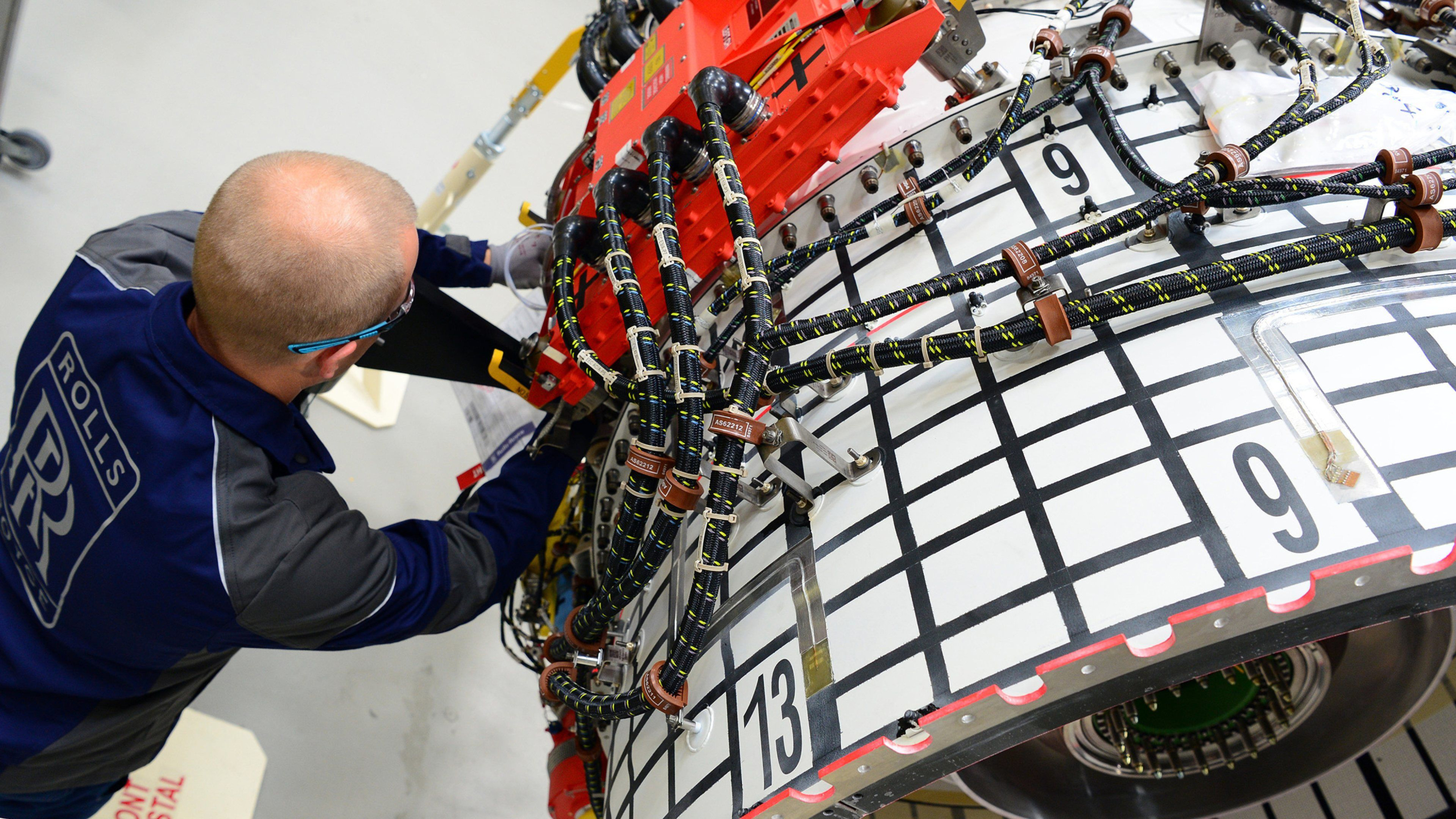
The Bombardier Challenger 3500 is powered by the Honeywell HTF7350 turbofan engines, a powerplant that has earned a strong reputation among pilots for its reliability, efficiency, and predictable performance. More than just a source of thrust, the HTF7350 plays a central role in why the Challenger 3500 is considered one of the most cost-effective and pilot-friendly aircraft in the super-midsize segment.
The Challenger 3500’s engine has a balance of power, durability, and operational efficiency, delivering real-world benefits that pilots and operators feel on every flight.
Each HTF7350 engine produces approximately 7,323 pounds of thrust, giving the Challenger 3500 strong takeoff performance while maintaining exceptional cruise efficiency. Pilots value the engine’s consistent power delivery, which translates into:
- Confident hot-and-high performance
- Strong climb gradients in obstacle-limited environments
- Predictable acceleration and energy management
This performance margin enhances safety while allowing crews to operate comfortably across a wide range of airports and conditions.
One of the most appreciated characteristics of the HTF7350 is its fuel efficiency across the mission profile. The engine is optimized to deliver:
- Lower fuel burn at long-range cruise
- Stable performance at high altitudes (FL450 and above)
- Efficient operation without aggressive thrust management
For operators and contract pilots alike, this efficiency translates directly into reduced trip costs, extended range flexibility, and improved dispatch economics, making the Challenger 3500 highly competitive in real-world utilization—not just brochure numbers.
Pilot COMPENSATION for 2026

PIC Contract Pilot Compensation
$4,500 - $6,000+

SIC Contract Pilot Compensation
$4,000 - $4,500
Type Rating CERTIFICATION

Initial / Recurrent Training
FlightSafety International – G700/G800 Training Programs (Savannah, Georgia):
Direct training information and enrollment details for Gulfstream G700/G800 pilot training.

Training Schools
At present, FlightSafety International is effectively the sole factory-authorized and widely recognized provider of Gulfstream G800 initial and recurrent type rating training with validated full-flight simulator courses and official curriculum developed in coordination with Gulfstream Aerospace for regulatory approvals.
The Bombardier Aircraft Professional Pilot Forum
CONNECT With Pilots Who Fly Your Specific Aircraft.
Learn More Now! >>>