
January 2025 - A Midair Collision Over the Potomac In Washington, DC
Jan 17, 2026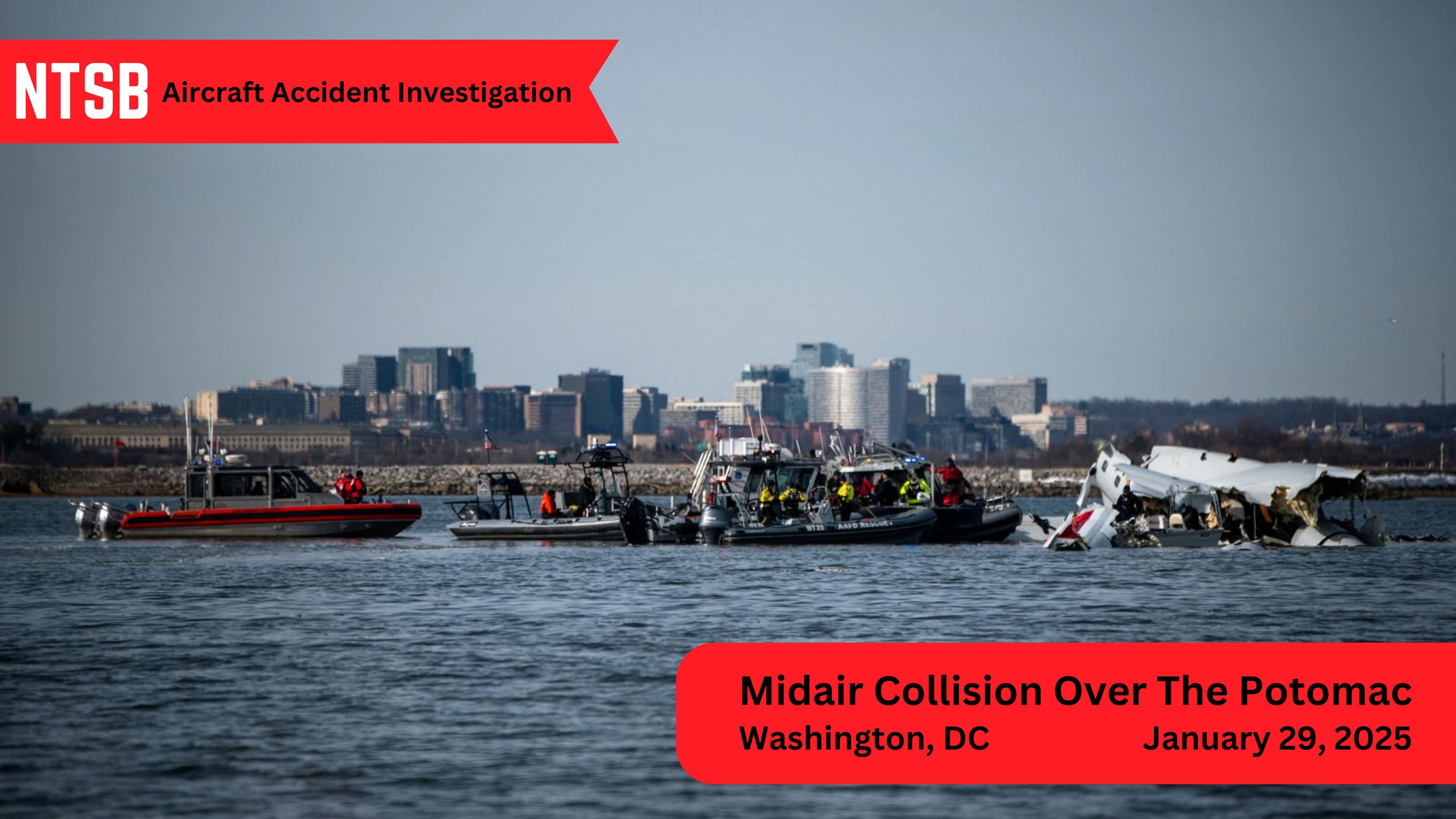
What Professional Pilots Should Be Paying Attention To Concerning The Midair Collision Over the Potomac
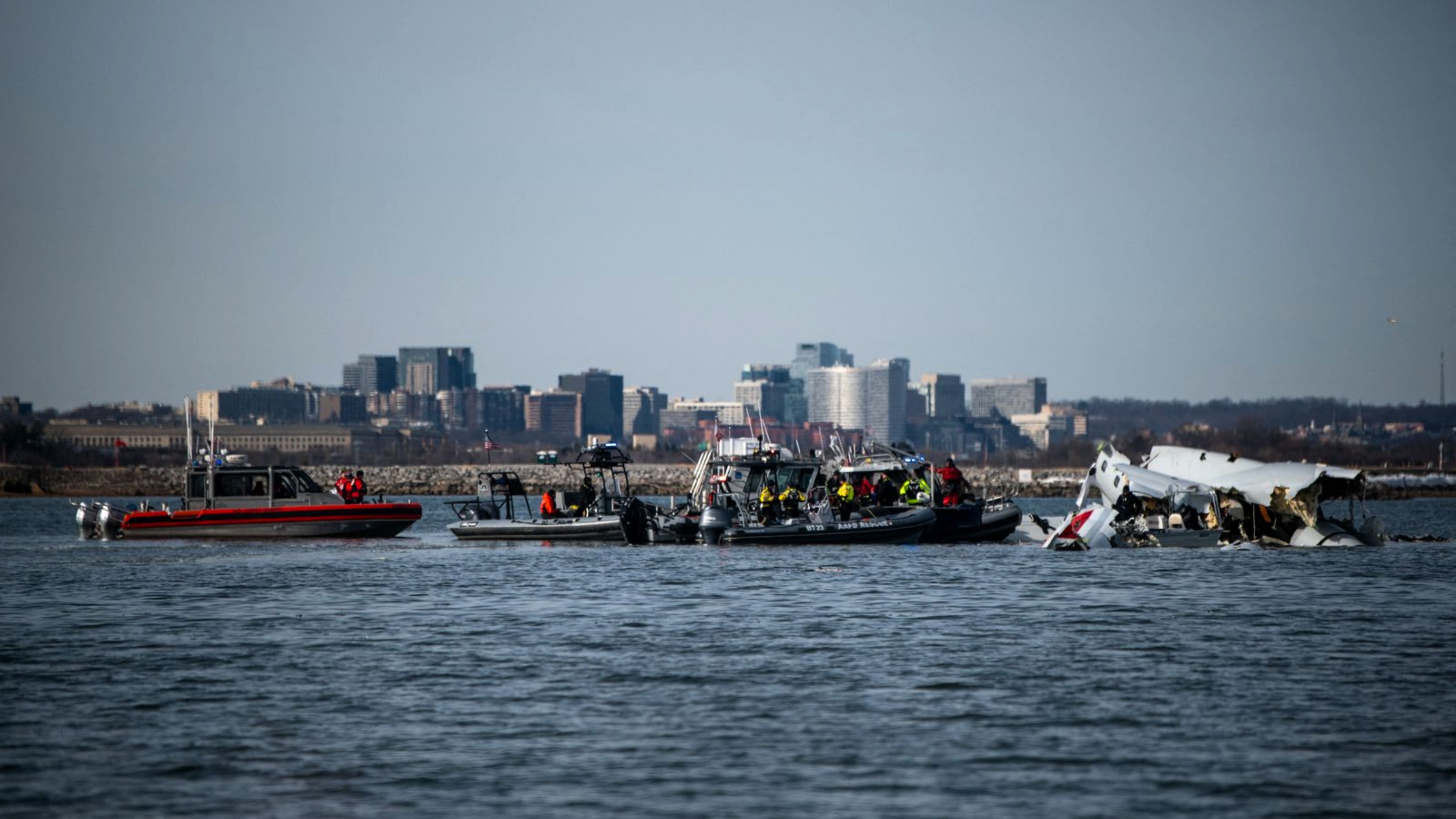
On January 29, 2025, the aviation community was shaken to its core by a catastrophic midair collision involving a PSA Airlines Bombardier CRJ700 operating as an American Eagle flight and a U.S. Army Sikorsky UH-60 Black Hawk helicopter.
The accident occurred over the Potomac River near Ronald Reagan Washington National Airport (DCA) during nighttime operations, resulting in the loss of all 67 souls aboard both aircraft. The National Transportation Safety Board (NTSB) is investigating the event. While the final probable cause has not yet been issued, the information released thus far raises serious questions that resonate deeply with line pilots operating in complex, high-density airspace.

At the time of the collision, the CRJ700 was on final approach to Runway 33 at DCA, operating under IFR in a highly constrained terminal environment. Simultaneously, the UH-60 helicopter was conducting a military operation along an established helicopter corridor that intersects the same airspace used by fixed-wing commercial traffic. Radar data indicates the collision occurred at a very low altitude, just seconds from the jet’s intended landing. This proximity—both lateral and vertical—highlights the unforgiving nature of mixed-use airspace where transport-category aircraft and rotary-wing military operations coexist.
As the investigation has progressed, attention has increasingly focused on systemic risk rather than isolated pilot error. One area of scrutiny is the long-standing integration of helicopter routes with commercial arrival and departure paths in the National Capital Region. Professional pilots familiar with DCA understand the razor-thin margins involved: short final segments, aggressive noise-abatement procedures, terrain and obstacle constraints, and some of the most complex ATC choreography in the NAS. Introducing dissimilar aircraft with vastly different performance profiles into this environment creates layers of risk that demand absolute clarity, coordination, and technological support.
Another issue under examination is surveillance and situational awareness. Preliminary information indicates the military helicopter was not broadcasting ADS-B Out data, which may have limited the fidelity of traffic information available to both controllers and nearby aircraft. While primary and secondary radar coverage exists, many professional pilots have come to rely on ADS-B as a critical layer of defense, particularly in congested or night operations. The absence of that data stream—especially in Class B airspace—raises broader questions about equipage standards and exemptions for government and military aircraft operating alongside civilian traffic.
The NTSB has already taken the rare step of issuing urgent safety recommendations to the FAA, specifically addressing helicopter routing and separation when certain runways are in use at DCA. In response, the FAA has implemented operational changes to restrict some helicopter movements during periods of commercial arrival and departure. These actions suggest investigators have identified meaningful, correctable hazards even before the final report is complete—an acknowledgment that the risk profile uncovered by this accident extends well beyond a single event.
For professional pilot captains, this accident strikes at the core of what we rely on every day: predictable airspace design, reliable surveillance, and standardized separation between dissimilar operations. It also underscores a reality many of us have discussed informally for years—systemic vulnerabilities often persist in plain sight until a tragedy forces change. Whether flying a regional jet, a large-cabin aircraft, or operating internationally, the lessons emerging from this investigation will likely influence future policy, training emphasis, and airspace management decisions across the industry.
The NTSB is expected to determine probable cause during a public board meeting in January 2026, after which a final report and additional safety recommendations will be released. Until then, this accident serves as a sobering reminder that even in the most controlled environments, latent risks can align with devastating consequences.
As a professional captain, you are invited to share your perspective. What are your thoughts on this accident? Do you believe mixed-use airspace around major airports is adequately managed, or does this event reveal deeper systemic issues that need to be addressed? Your experience and insight are critical to advancing the conversation on aviation safety.